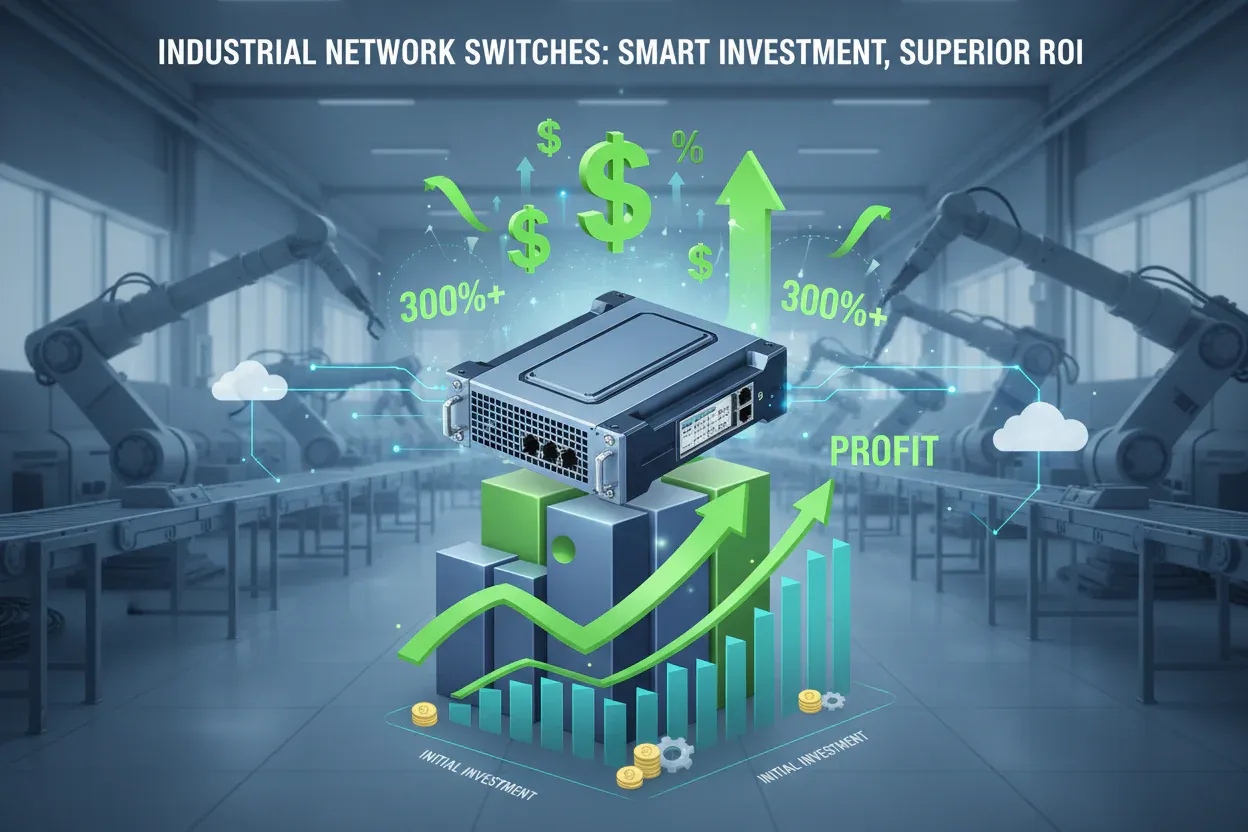


ROI of Network Switches
Key factors for industrial applications
Link
Close share
Copy link
Total Cost of Ownership
Purchasing for the long term
Maximizing performance in harsh conditions
- Upfront Costs vs. Lifespan: Industrial switches may come with a higher upfront cost, but their robust design and fanless cooling systems allow them to operate for 10 years or more in harsh environments. In contrast, commercial switches typically require replacement within 2-3 years under similar conditions. A well-chosen industrial switch offers a far lower TCO over time, especially in critical applications like utilities and infrastructure.
- Maintenance and Replacement Costs: The reduced likelihood of failure and lower maintenance costs of industrial switches offer a better ROI in the long run, especially in mission-critical operations.
2. Environmental Resilience: Operating in Tough Conditions
- Thermal Management: Industrial switches can operate in temperatures ranging from -40°C to 75°C (-40°F to 167°F), making them perfect for outdoor installations or factory environments where temperature fluctuations are common.
- Protection from Physical Damage: With high-strength casings and protection against dust and moisture (IP67 ratings), industrial switches are designed to endure the kind of physical wear and tear that commercial models simply can't handle.
3. Redundancy and Failover Capabilities: Minimizing Downtime
Dual Power Inputs and ERPS: Industrial switches often come with dual power inputs, ensuring that if one power source fails, the device continues to function. Additionally, ERPS offers a fail-safe mechanism that reroutes data within milliseconds if a network loop occurs.
Conclusion
When purchasing network switches for industrial applications, it’s important to look beyond the initial price tag. Focus on the long-term reliability, performance, and reduced downtime that industrial-grade switches provide. This will not only optimize your client's operational efficiency but also increase their ROI in the long run.
