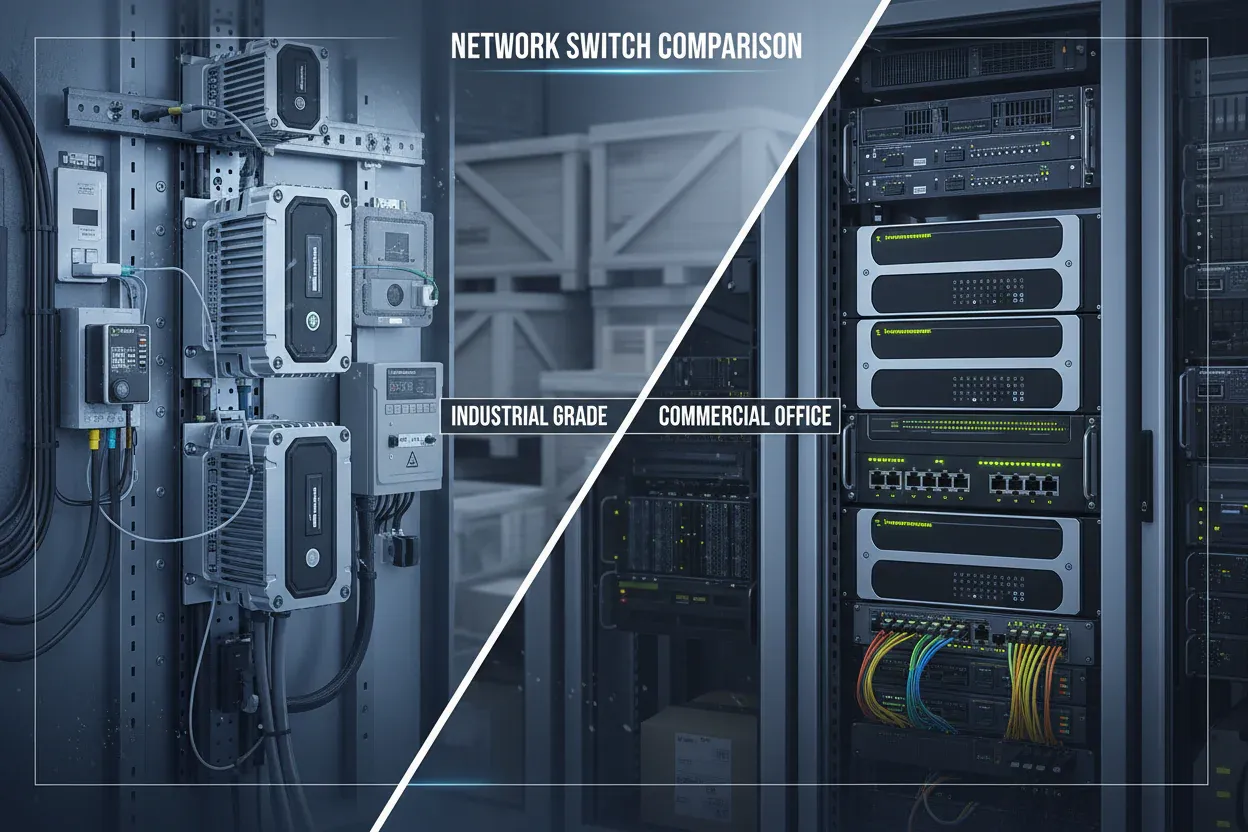


Essential Guide for Network Switches
DECEMBER 1, 2025
Link
Close share
Copy link
Target Audience: Network Administrators, IT Managers
Can you trust our partners?
Introduction Choosing the right network switch is critical for seamless operations. This guide covers key considerations for selecting switches that meet project demands, focusing on performance, scalability, and budget for enterprise-level deployments.
- Site-Specific Needs: Before purchasing, assess the environment where the switches will be deployed. For instance, outdoor projects, such as traffic light systems or remote industrial sites, require switches that can operate in extreme temperatures and withstand environmental stress.
- Power and Bandwidth Requirements: Large-scale projects may demand high-capacity switches that can handle gigabit or 10G speeds, especially if the network will support thousands of devices or high-definition surveillance cameras. Always consider future scalability and potential network growth when selecting switches.
2. Key Features to Look For: Advanced Protocols and Durability
- EMI Shielding: In industrial projects with heavy machinery or high-voltage power lines, Electromagnetic Interference (EMI) can degrade the performance of commercial switches. Ensure the switches you select are tested against EMI standards (e.g., IEC 61000-4) to maintain optimal signal integrity.
- Fanless Design: For harsh environments, look for fanless switches with metal casing heat sinks, which offer better thermal management and increased reliability compared to switches that rely on fans, which can fail in dusty or humid environments.
3. Budgeting and Total Cost of Ownership (TCO)
- Long-Term Savings: While industrial switches are more expensive upfront, they offer a significant reduction in maintenance and replacement costs over time, making them a better investment for large-scale projects with long lifespans.
- Operational Efficiency: Managed switches can provide remote monitoring and management capabilities, enabling better oversight of the network and reducing troubleshooting time, which translates to increased productivity and lower operational costs.
Conclusion
When evaluating network switches for large-scale projects, it’s crucial to consider environmental durability, power needs, and future scalability. By focusing on the long-term performance and reliability of industrial-grade switches, you can ensure the success of your project while providing a cost-effective solution to your clients.
Network Switch Selection Guide
This guide provides in-depth coverage of key factors B2B buyers should consider when selecting network switches. We focus on providing actionable advice for wholesale buyers and project managers.
Explore the differences between industrial and commercial models, considering aspects like environmental resilience and long-term cost savings.
Make informed decisions for your network infrastructure.